
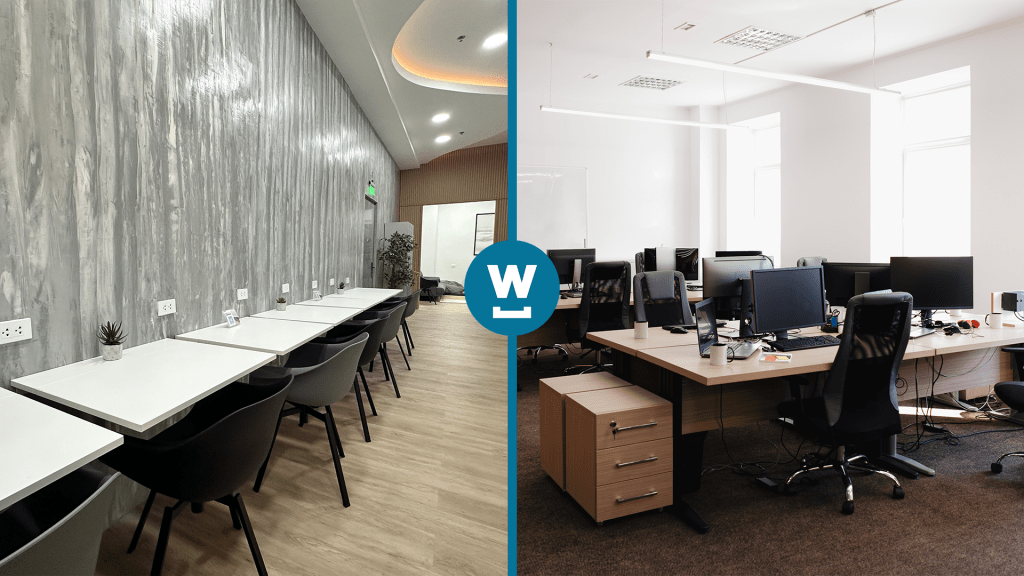
Coworking Spaces vs Traditional Offices: Comparing Cost, Productivity, and Flexibility
Coworking Spaces vs Traditional Offices: Comparing Cost, Productivity, and Flexibility May 11, 2026 Coworking & Productivity The Workspaces Team Share Blog: Facebook Linkedin X Choosing between coworking spaces and traditional offices is one of the most practical decisions modern businesses face. With hybrid work now a standard operating model, companies and independent professionals are reassessing what type of workspace best supports cost efficiency, productivity, and long-term flexibility. This comparison is no longer just about preference. It directly affects operating costs, team performance, and how easily a business can adapt to change. In many cases, the choice between coworking spaces vs traditional offices determines whether a company stays agile or becomes locked into fixed overhead. The Shift in How Businesses Use Workspaces Traditional offices were once the default model for all businesses. Long leases, dedicated office fit-outs, and fixed seating arrangements were seen as necessary for credibility and productivity. Today, that model is being challenged. Businesses are moving toward flexible setups that align with hybrid work, remote teams, and project-based operations. Coworking spaces have emerged as a practical alternative, especially for SMEs, startups, and freelancers who need structure without long-term financial commitment. In the Philippines, this shift is especially visible among growing businesses outside major central business districts. Flexible workspace providers like Workspaces by SOS are part of this change, offering professional environments without the rigidity of traditional leases. Cost Comparison: Coworking Spaces vs Traditional Offices Cost is often the most immediate and decisive difference between the two models. Traditional offices require long-term financial commitments and higher upfront investment, while coworking spaces operate on a more flexible, usage-based structure that adjusts to business needs. The difference becomes clearer when comparing both models side by side. Cost Comparison Table Factor Coworking Spaces Traditional Offices Upfront Costs Low or none (membership-based) High (deposits, advance rent, fit-out) Monthly Expenses Flexible, scalable based on usage Fixed regardless of usage Lease Commitment Short-term or flexible terms Long-term contracts (multi-year common) Utilities & Maintenance Included in membership Separate operational expenses Office Setup Costs Not required Furniture, equipment, IT setup needed Scalability of Cost Easy to increase or reduce usage Difficult to adjust mid-lease Financial Risk Lower fixed commitment Higher long-term liability Traditional Offices Traditional offices typically require: Long-term lease contracts Security deposits and advance payments Office fit-out and furnishing costs Utility setup and monthly overhead Maintenance and administrative costs These expenses are fixed in nature, meaning businesses pay the same amount regardless of actual usage, headcount changes, or revenue performance. This structure can create pressure for SMEs that need flexibility in managing cash flow. Coworking Spaces Coworking spaces operate on a more flexible model that prioritizes adaptability: Pay-per-use or membership-based pricing No major upfront fit-out costs Utilities and maintenance included Ability to scale usage up or down as needed For SMEs, freelancers, and growing teams, this model reduces financial pressure and allows capital to be redirected toward core business activities such as marketing, hiring, and product development. It also reduces the risk of being locked into unused or underutilized office space. Productivity: Structured Focus vs Controlled Flexibility Productivity is influenced heavily by environment, not just discipline or tools. Traditional Offices Traditional offices provide stability and routine. However, they can also become inefficient when: Space is underutilized Layouts are not optimized for hybrid work Teams are too small for the space being rented Coworking Spaces Coworking environments are designed to support productivity through: Ready-to-use workstations Reliable internet and infrastructure Reduced setup friction Exposure to other working professionals This environment often encourages focused work because the space is purpose-built for work activity rather than being adapted from a long-term corporate structure. Flexibility and Scalability Flexibility is one of the strongest differentiators in the coworking spaces vs traditional offices comparison. Traditional Offices Scaling in a traditional office setup usually means: Renegotiating leases Expanding physical space Increasing fixed costs Committing to long-term contracts This makes rapid scaling difficult, especially in uncertain market conditions. Coworking Spaces Coworking spaces allow businesses to: Add or reduce seats as needed Access meeting rooms without permanent allocation Adjust usage based on project demand This is particularly useful for startups, project-based teams, and seasonal operations. Business Credibility and Client Perception There is a common perception that traditional offices automatically convey more credibility. While this may still apply in certain industries, it is becoming less relevant in modern business environments where flexibility and efficiency are increasingly prioritized. Today, many coworking spaces offer professional meeting rooms, business-grade addresses in commercial areas, and well-designed client-facing environments that create a strong professional impression without requiring businesses to maintain a permanent office. For most clients, professionalism during interactions matters more than ownership of a physical office. Factors such as communication quality, preparedness, responsiveness, and the overall meeting experience often have a greater impact on trust and decision-making than whether a company operates from a traditional office lease. In locations such as Cavite, businesses are increasingly using flexible workspaces not only for daily operations but also for client presentations, strategy meetings, and collaborative sessions. Providers like Workspaces by SOS offer structured, professional environments that support both internal productivity and client-facing activities, allowing businesses to maintain credibility while operating with greater flexibility. Hybrid Work Has Changed the Equation Most modern teams no longer operate from a single fixed location. Instead, businesses are adopting hybrid work models that combine remote work, coworking space usage, and occasional office or meeting room bookings depending on operational needs. This approach allows companies to match the workspace to the type of task being performed. Deep focus work can happen in quieter or remote environments, while collaboration, brainstorming sessions, and client meetings can take place in shared workspaces or professionally managed meeting rooms. For many SMEs and growing teams, this flexibility improves both cost efficiency and productivity because workspace usage becomes more intentional rather than fixed. It also allows businesses to scale operations more easily without being tied to large, permanent office spaces. This level of adaptability is often difficult to achieve in a fully traditional office setup, where costs and infrastructure remain fixed regardless of how frequently the space is actually used. When a Traditional Office Still Makes Sense Despite