5-min read

Business & Growth

The Hidden Costs of Traditional Offices and What SMEs Should Do Instead

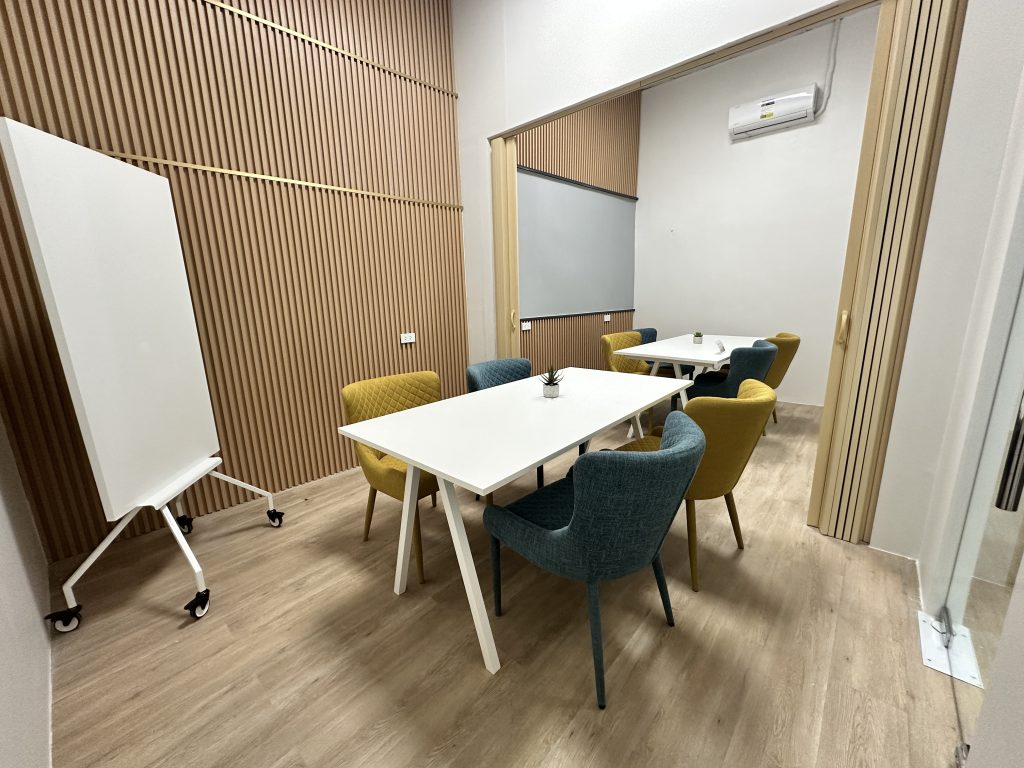
The Hidden Costs of Traditional Offices and What SMEs Should Do Instead April 21, 2026 Business & Growth The Workspaces Team Share Blog: Facebook Linkedin X For many small and medium enterprises, renting a traditional office seems like a necessary part of doing business. A fixed address, dedicated desks, and meeting rooms convey professionalism and stability. However, the reality is that conventional offices come with hidden costs and challenges that can weigh heavily on an SME’s budget and agility. Understanding the trade-offs between a traditional office and a virtual or flexible office can help businesses make smarter decisions that balance cost, productivity, and employee satisfaction. The True Cost of a Traditional Office Maintaining a conventional office often involves more than just paying monthly rent. Several hidden expenses can quietly add up over time: Utilities and maintenance – Electricity, water, cleaning, repairs, and general upkeep often exceed initial estimates. Furniture and equipment – Desks, chairs, printers, and other essentials require upfront investment and periodic replacement. Insurance and compliance – Protecting assets and meeting regulatory requirements adds recurring costs. Long-term leases – Fixed contracts limit flexibility and can be costly to exit if business needs change. These factors make the total cost of running a traditional office significantly higher than the monthly rent suggests. Operational Challenges and Staffing Implications Beyond finances, conventional offices bring operational complexities that SMEs must manage: Management overhead – Supervising facilities, maintaining equipment, and coordinating office logistics takes time and resources away from core business activities. Staff expectations – Many professionals now expect hybrid or flexible arrangements. Companies locked into rigid office hours may struggle to attract or retain top talent. Retention challenges – Employees are more likely to stay in environments that offer autonomy, flexibility, and a comfortable workspace that supports productivity. Market Flexibility and Agility Rigid office setups can limit a business’s ability to respond quickly to market changes: Faster market shifts – Customer demands, technology trends, and competitive pressures evolve rapidly. Fixed office structures can slow decision-making and adaptation. Scaling limitations – Expanding or downsizing office space involves long-term contracts and significant costs, making it difficult to match resources to changing business needs. Opportunity costs – Time and energy spent managing an inflexible office is time not spent on growth initiatives, client acquisition, or innovation. Smart Alternatives for SMEs Flexible office solutions provide a practical path forward. Options such as coworking spaces, shared offices, or hybrid setups allow SMEs to enjoy professional environments without the burden of long-term commitments. Key advantages include: Pay-as-you-go arrangements – Rent only the space you need, when you need it. Professional facilities – Meeting rooms, high-speed internet, and equipped workstations are ready to use. Scalable options – Easily increase or reduce space as your team grows or contracts. Flexible locations – Work from spaces near clients, partners, or employee homes to reduce travel time. In Kawit, SMEs benefit from venues like Workspaces by SOS, which offer flexible office desks, meeting rooms, and collaborative areas. These setups let teams focus on business outcomes rather than office management. Practical Tips for Transitioning When moving from a traditional office to a flexible workspace: Assess actual space needs – Evaluate your team size, meeting frequency, and operational requirements. Choose hybrid models – Allow employees to work from home on certain days and use professional spaces for collaboration or client meetings. Prioritize cost-effective facilities – Focus on essentials like high-speed internet, ergonomic furniture, and meeting rooms rather than unnecessary frills. Consider accessibility – Locations near public transport or key business areas reduce commuting time and improve attendance. Leverage scalable memberships – Many providers, including Workspaces by SOS, offer flexible packages to suit evolving business needs. Final Thoughts The comparison of a traditional office vs virtual office highlights that the most expensive option is not always the most effective. SMEs can save money, increase flexibility, and enhance employee satisfaction by embracing modern workspace solutions. Flexible offices allow businesses to focus on what matters: growth, productivity, and client satisfaction. By making intentional choices about workspace, SMEs can reduce overhead, retain talent, and remain agile in a fast-changing market. For SMEs looking to adapt without sacrificing professionalism, exploring flexible options such as coworking spaces or virtual office setups is a practical and strategic step forward. Tags: 5-min read, virtual office, tips and guides, traditional office vs virtual office, SME office solutions, flexible workspace, business costs, office overhead, coworking, virtual office Philippines, cost efficiency Category: Business & Growth ← Back to Blogs More Productive Reads Half-Day vs Full-Day Workshops: Which Format Works Best for Your Business? Read Article → The Real ROI of Coworking Spaces for Freelancers and Small Teams Read Article → Load More


Coworking & Productivity

The Real ROI of Coworking Spaces for Freelancers and Small Teams

The Real ROI of Coworking Spaces for Freelancers and Small Teams April 13, 2026 Coworking & Productivity The Workspaces Team Share Blog: Facebook Linkedin X For many freelancers and small teams, coworking spaces are often seen as an added expense. When you already have a home setup or access to cafes, paying for a workspace can feel unnecessary. However, this perspective only looks at cost on the surface and does not account for what is gained in return. The real return on investment of coworking spaces goes beyond rent or daily rates. It includes productivity, time efficiency, professional credibility, and even consistency in how work gets done. When viewed this way, coworking becomes less of a cost and more of a strategic tool for better output. What ROI Really Means for Freelancers and Small Teams Return on investment is often associated purely with financial gain. However, for independent professionals and small teams, intangible factors such as time, focus, and work quality carry just as much weight. A distracted workday, unreliable internet, or an unproductive environment can result in missed opportunities that cost far more than the price of a workspace. There is also the concept of opportunity cost to consider. If your current setup limits your ability to concentrate, collaborate effectively, or present yourself professionally to clients, that limitation directly affects your potential for growth. Understanding ROI in this context shifts the question from “How much does coworking cost?” to “What does it enable me to do better?” The Hidden Costs of Working From Home or Cafes Working from home or in cafes is convenient, but it often comes with trade-offs that are easy to overlook. Distractions and inconsistent focus  Household interruptions, noise, and multitasking can break concentration throughout the day. Unreliable setup Internet issues, limited desk space, and uncomfortable seating can slow down work. Limited professionalism Taking client calls or meetings in informal settings can affect how your work is perceived. Blurred boundaries When work and personal spaces overlap, it becomes harder to maintain a consistent routine. Individually, these may seem minor. Over time, they compound into reduced productivity and missed opportunities. These challenges are explored further in our previous articles comparing coffee shops vs coworking spaces and working from home vs coworking setups, where we break down how different environments directly impact focus and performance. Tangible ROI of Coworking Spaces Coworking spaces offer clear, practical advantages that directly impact efficiency and cost management, especially for professionals balancing remote work with the need for a more consistent and productive environment. Cost Efficiency Compared to Traditional Offices Unlike traditional office setups, coworking spaces do not require long-term leases, large deposits, or upfront investment in furniture and equipment. This makes them accessible for freelancers and small teams who want a professional setup without committing to fixed overhead. Access to Professional Facilities Reliable internet, proper workstations, and meeting rooms are readily available. Instead of piecing together a work environment, everything is already designed for productivity. This level of readiness reduces daily friction. There is no need to troubleshoot connectivity issues, adjust makeshift setups, or search for suitable meeting venues. Having consistent access to well-maintained facilities allows professionals to focus more on delivering quality work and less on managing their environment. Scalability for Small Teams As teams grow or change, workspace needs can adjust accordingly. You are not locked into more space than you actually use. For example, many professionals in Cavite choose to work from home on some days and use spaces like Workspaces by SOS when they need a more structured setup or a place to meet clients. Intangible ROI That Drives Real Results Some of the most valuable returns are not immediately visible, but they significantly affect performance. Improved Focus and Productivity A dedicated work environment reduces distractions and signals to your brain that it is time to focus. This often leads to better output in less time. When you consistently work in a space designed for productivity, it becomes easier to build routines and maintain deep focus. Over time, this can improve not only the speed of your work but also the quality of your output, as fewer interruptions allow for more sustained concentration. Professional Image Meeting clients in a proper workspace creates a stronger impression. It reflects reliability and preparedness, which can influence trust and decision-making. A professional setting also provides a level of consistency in how you present your work and your brand. Whether it is a formal meeting or a quick discussion, the environment plays a role in reinforcing credibility and making interactions feel more structured and intentional. Time Savings Less time is spent setting up, troubleshooting, or adjusting your environment. You can start working immediately and maintain momentum throughout the day. This efficiency compounds over time. Small delays caused by unstable internet, uncomfortable setups, or constant adjustments can add up and disrupt your workflow. A ready-to-use environment removes these barriers, allowing you to focus on high-value tasks from the moment you begin working. Clear Work-Life Boundaries Having a separate space for work helps create structure. This separation supports consistency and reduces burnout over time. When your workspace is physically distinct from your personal space, it becomes easier to establish routines and switch off at the end of the day. This balance supports long-term productivity by helping you stay disciplined during work hours while still allowing time to rest and recharge. Coworking as a Strategic Tool, Not Just a Workspace Coworking does not have to be an everyday expense to deliver value. Many freelancers and teams use it intentionally. For example: Booking a workspace for deep focus days Using meeting rooms for client presentations Gathering teams for collaboration sessions In places like Kawit, having access to a nearby option such as Workspaces by SOS makes this approach more practical. It allows professionals to choose the environment that fits the task, instead of forcing all work into a single setup. Final Thoughts The real ROI of coworking spaces is not just about what you spend. It is about what you gain in return. Better focus, stronger client impressions, more efficient workdays, and improved consistency all contribute to long-term growth. For freelancers and small teams, these advantages often outweigh the cost of access to a professional workspace. If your current setup makes it harder to stay

Coworking & Productivity

10 Practical Productivity Tips for Hybrid and Remote Professionals

10 Practical Productivity Tips for Hybrid and Remote Professionals March 24, 2026 Coworking & Productivity The Workspaces Team Share Blog: Facebook Linkedin Twitter Hybrid and remote work are now part of everyday professional life. Many people enjoy the flexibility that comes with working from different locations, but flexibility also brings new challenges. Distractions at home, blurred schedules, and constant digital communication can quietly reduce focus and efficiency. Productivity in a hybrid or remote setup requires structure, intentional habits, and the right environment. The good news is that small, practical changes can make a big difference, especially when professionals combine home setups with structured environments like coworking spaces in Cavite. Here are ten realistic productivity tips for hybrid and remote professionals who want to work smarter and stay consistent wherever they are. 1. Define Clear Work Zones Your brain responds to environment. When you work in the same place where you relax or sleep, it becomes harder to switch into focus mode. Create a dedicated work zone, even if it is just a small desk in a corner. The goal is to train your mind to associate that space with productivity. If home space is limited, rotating into a professional coworking space such as Workspaces by SOS in Kawit, Cavite can help reinforce that boundary while giving you access to a structured work setting. 2. Schedule Your Day with Intention Hybrid and remote work give freedom, but unstructured days often lead to procrastination or overwork. Time-block your calendar. Assign specific hours for deep work, meetings, and admin tasks. A simple structure reduces decision fatigue and helps maintain momentum throughout the day. For professionals who frequently attend client meetings, booking meeting rooms in Kawit instead of hosting virtual calls from home can also help maintain professionalism and minimize interruptions. 3. Minimize Digital Distractions Notifications, emails, and chat messages can interrupt focus dozens of times per hour. Try these simple controls: Silence non-urgent notifications Check email at set times instead of constantly Use focus modes on your devices Small digital boundaries protect your attention and improve work quality, especially when combined with a quiet and work-focused environment like a coworking space, instead of your room/home or a busy cafe. 4. Use Proven Productivity Methods Productivity frameworks exist because they work. You do not need to follow them perfectly, but they can guide your workflow. Popular options include: Pomodoro Technique for focused sprints Eisenhower Matrix for prioritization Task batching for similar activities These methods help you avoid getting overwhelmed and keep tasks manageable. 5. Take Breaks Seriously Working longer does not always mean producing more. Fatigue reduces accuracy, creativity, and decision-making. Short breaks between work sessions allow your brain to reset. A quick walk, stretching, or stepping away from screens can restore energy and focus. If you work from a coworking space like Workspaces by SOS, access to lounge areas and shared amenities makes it easier to take meaningful breaks without fully disconnecting from your workday. 6. Communicate Boundaries Clearly Remote and hybrid setups can blur availability as people often let work spill into personal time without realizing. You must be clear about the following things: Your working hours Response time expectations Meeting availability Clear communication protects both productivity and well-being. Pairing defined boundaries with a structured workspace outside the home can further strengthen that separation between work and personal life. 7. Use Coworking Spaces for Focus Days Some tasks require deeper concentration than home environments can support. This is where coworking becomes valuable. Working occasionally from a professional setting like Workspaces by SOS gives you some advantages over working at home (or maybe say in a coffee shop): Fewer distractions Reliable internet and facilities A work-focused atmosphere Even one or two coworking days per week can improve consistency and output. 8. Keep Your Workspace Organized Visual clutter competes for attention. A messy desk can subtly increase stress and reduce clarity. A few simple habits can help you make sure you’re at your peek productivity when you’re at your desk: Clear your desk at the end of the day Keep only essentials within reach Use digital storage to reduce paper clutter Remember: An organized space supports an organized workflow. 9. Review Your Progress Weekly Productivity improves when you measure it. A weekly review helps you see what works and what needs adjustment. Ask yourself: Which tasks moved my goals forward? When was I most focused? What distracted me the most? Reflecting on these areas allows you to refine your routine. If you notice that certain days are consistently less productive at home, incorporating time in a professional coworking environment may be a practical solution. 10. Build Social Accountability Working alone can reduce motivation for some people. Light social accountability can help maintain morale and discipline. Options include: Virtual co-working sessions Teammates or Work partners Working around other professionals in shared spaces Being around focused individuals in a coworking space in Cavite can naturally encourage you to stay on task. Professional environments like Workspaces by SOS create a balance between independence and community, which many hybrid workers find motivating. Making Productivity Sustainable Productivity is not about squeezing more hours into the day. It is about making your time and energy count. Sustainable productivity comes from supportive habits, realistic schedules, and environments that help you focus. Hybrid and remote professionals have more control over how they work than ever before. That control becomes powerful when used intentionally. If your current setup makes it hard to focus, changing your environment can be a practical first step. Many professionals in Cavite find that rotating between home and professional coworking spaces such as Workspaces by SOS gives them both flexibility and structure. Access to reliable facilities, comfortable work areas, and meeting rooms in Kawit can significantly improve both productivity and professionalism. In the end, productivity is personal. The key is finding a system and environment that help you perform at your best consistently. Tags: 5-min read, coworking spaces, meeting rooms, tips and guides, hybrid work productivity, remote work tips, coworking productivity, time management, flexible work, digital professionals, focus strategies, work efficiency Category: Coworking & Productivity ← Back to Blogs More Productive Reads Lean Business Expansion: How SMEs Can Grow Without Heavy Overhead Read Article → The Psychology of a Productive Workspace: Why Environment Shapes Output Read Article → Load More

Meetings & Events

How to Run High-Impact Business Workshops Without Renting a Hotel Function Room

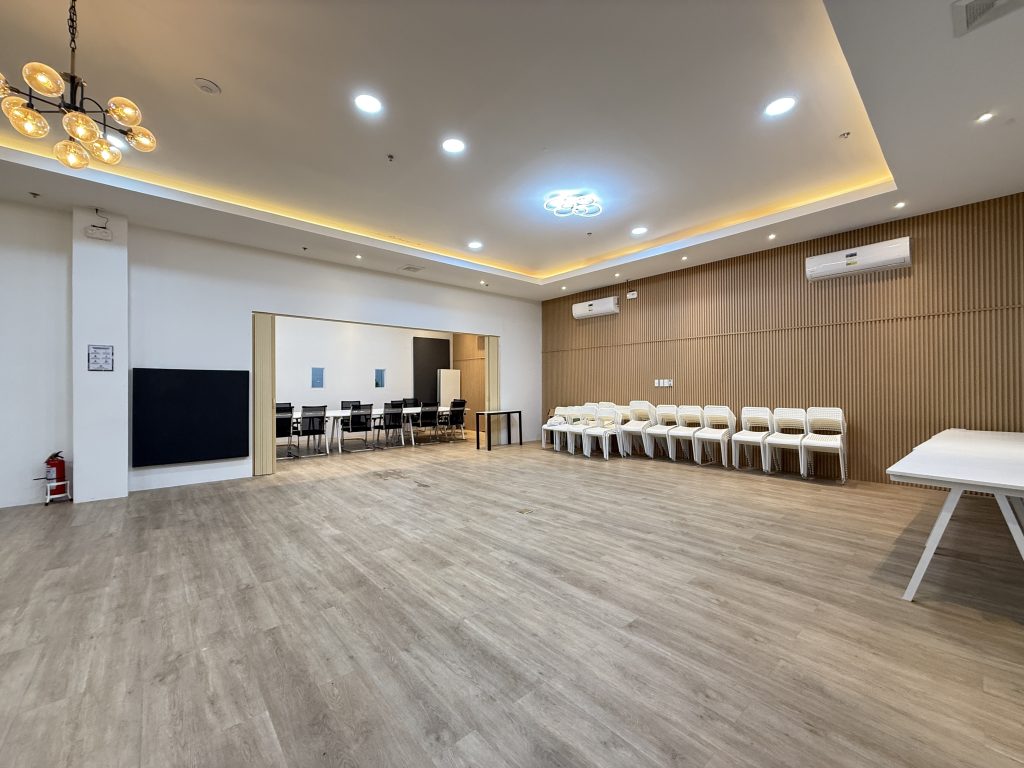
How to Run High-Impact Business Workshops Without Renting a Hotel Function Room March 2, 2026 Meetings & Events The Workspaces Team Share Blog: Facebook Linkedin Twitter It is a common mindset among many business owners that a successful workshop must be held in a hotel function room or ballroom. Many think and see the idea of large spaces, formal setups, and premium catering as signs of professionalism. For years, this was the default choice for corporate events and trainings. But in modern times, this mindset is slowly shifting. Small and medium enterprises are becoming more practical about how they spend. Trainers, consultants, and business owners now recognize that a high-impact workshop is not defined by chandeliers or buffet spreads, and is instead defined by learning outcomes, engagement, and client experience. A well-run workshop can happen in a focused, professional environment that supports interaction and learning. Choosing the right venue for business workshops or events is less about luxury and more about functionality. What Makes a Workshop Truly High-Impact Before choosing a venue, it helps to define what “high-impact” actually means. A strong business workshop is often defined by: Clear objectives Participants should understand what they will gain. Whether it is skills, insights, or strategies, the purpose must be clear from the start. Active participation Workshops work best when attendees engage in discussions, activities, or group work. Interaction improves retention and value. Comfortable environment Seating, lighting, and room temperature affect focus. A comfortable participant is more likely to stay engaged. Smooth logistics Easy registration, accessible location, and reliable equipment all contribute to a positive experience. These elements matter far more than an oversized and over-the-top venue. The Hidden Costs of Hotel Function Rooms Hotels often come with minimum food and beverage spend requirements, which can quickly inflate the cost of even a small workshop. Most hotels primarily offer large function rooms designed to fit 100 to 200 people, and these spaces are typically paired with catering packages for a similar headcount. Organising a small, simple session in this setup can feel excessive and unnecessary. On top of this, many venues restrict outside food and drinks, limiting flexibility and leaving organisers with fewer cost-saving options. Time constraints can also be an issue. Some venues operate on strict booking windows, so running a session longer than planned may result in additional charges. For SMEs and independent trainers, these costs rarely translate into better results. Smarter Alternatives for Business Workshops Today, many organizers are turning to right-sized, professional venues. Options include: Meeting rooms in coworking spaces Training rooms in business centers Flexible seminar spaces for small groups These venues are designed for productivity. They usually include fast internet, presentation tools, and comfortable seating without unnecessary extras. In areas like Kawit, businesses now have access to modern spaces that support workshops without the high price tag of central business districts. Providers like Workspaces by SOS offer training rooms and meeting spaces suited for focused sessions, team trainings, and client workshops. If you are exploring options, you can view available meeting and training rooms to understand how venues that are of perfect sizes are structured. Planning a High-Impact Workshop on a Practical Budget Budget plays a major role in how businesses plan events and workshops. Larger companies may have the resources for large-scale productions, but SMEs often need to work within tighter limits. A practical budget, however, does not mean lower quality. It simply requires smarter allocation of resources and clearer priorities. A successful workshop is measured by outcomes such as engagement, learning, and relationship-building, not by how much is spent. With the right approach, SMEs can achieve strong results while staying cost-conscious. Here are practical ways to hit your workshop goals without overspending: Choose the right venue size Align the room capacity with your realistic headcount. A comfortably filled space boosts participation, discussion, and overall energy, while an oversized room can make sessions feel flat and disconnected. Schedule for attention, not just availability Design your agenda around natural focus cycles. Half-day or modular sessions often sustain engagement better than full-day programs, and they reduce fatigue without increasing cost. Prioritize content and facilitation quality Participants remember insights and interactions, not decorations. Invest time in strong materials, clear learning outcomes, and a capable facilitator who can guide discussion and keep momentum. Maximize simple tools Well-used basics like flipcharts, slides, and small group discussions drive interaction and retention. Thoughtful use of simple tools is often more effective than expensive tech or elaborate setups. Plan flow and timing carefully A clear run-of-show, defined segments, and built-in breaks keep the workshop on track. Good pacing improves learning and avoids the need for costly add-ons to regain attention. Why SMEs Are Shifting to Flexible Workshop Venues Many SMEs are also rethinking where they host their workshops. Instead of committing to large, one-time events, they are shifting toward flexible venues that support frequent, focused sessions throughout the year. Flexible workshop venues typically offer: Pay-per-use pricing Professional environments Easy booking processes Convenient access for local participants This model allows businesses to spread their budget across multiple workshops rather than spending heavily on a single event. Smaller, recurring sessions often build stronger relationships, reinforce learning, and provide more consistent value over time. For businesses in Cavite and nearby areas, choosing local venues also reduces travel time for both organizers and attendees. This convenience can improve attendance rates and overall participant satisfaction. Turning Flexible Workshops into a Competitive Advantage As SMEs continue to prioritise agility, the right venue becomes more than just a location. It becomes a strategic partner. Workspaces by SOS is designed to support businesses that want to run workshops smarter, not bigger. Our coworking spaces in Kawit, Cavite offer flexible, professional environments that adapt to your needs, whether you are hosting a half-day skills session, a recurring training program, or focused team workshops throughout the year. With pay-as-you-use options, seamless booking, and well-equipped meeting rooms, businesses gain access to affordable coworking spaces in Cavite without long-term commitments. By choosing a local coworking space or shared office in Cavite, SMEs reduce travel time, improve attendance, and create more meaningful learning experiences. Workspaces by SOS supports startups, freelancers, and growing teams looking for workshop venues, training rooms, and flexible office spaces in Cavite that align with modern ways of working.

Meetings & Events

Hosting Productive Client Meetings Without a Permanent Office

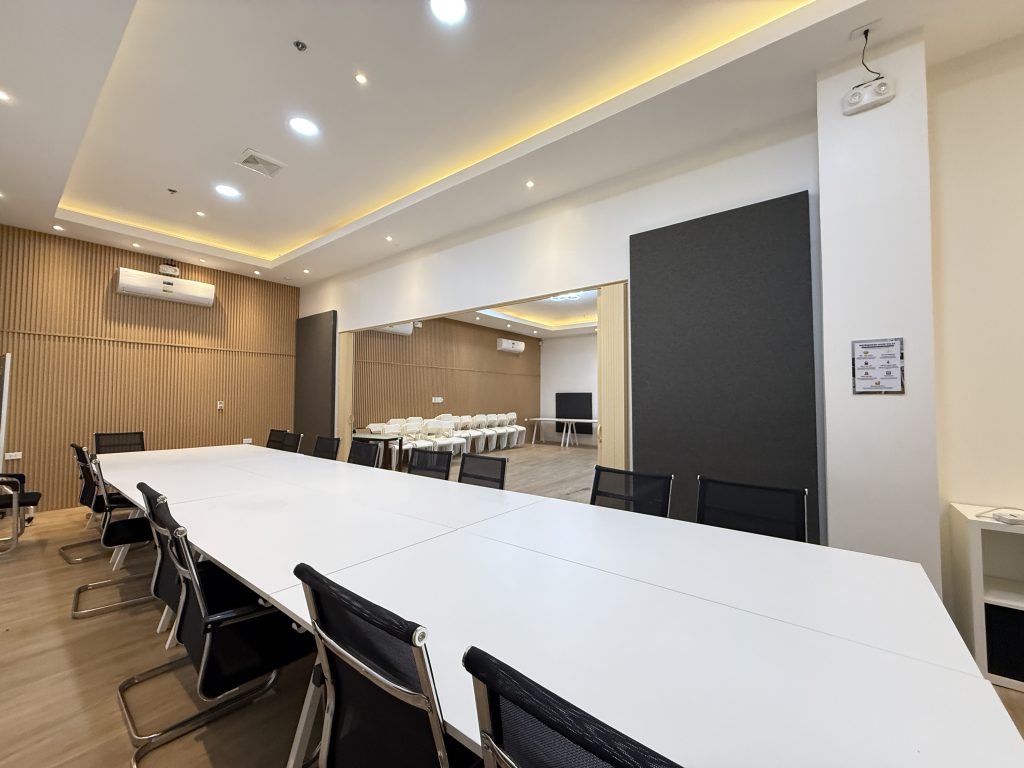
Hosting Productive Client Meetings Without a Permanent Office February 16, 2026 Meetings & Events The Workspaces Team Share Blog: Facebook Linkedin Twitter Client meetings remain one of the most important touchpoints in any business relationship. Whether you are pitching a service, reviewing progress, or closing a deal, how and where you meet clients influences how they perceive your brand. For many freelancers, startups, and SMEs, maintaining a permanent office is not always practical. High rent, long-term leases, and operational costs can strain cash flow, especially for growing businesses. The good news is that you do not need a traditional office to host professional and productive meetings. Why Client Meetings Still Matter Even in a digital-first world, face-to-face meetings build trust faster than emails or calls alone. Research in business communication consistently shows that in-person interactions improve clarity, reduce misunderstandings, and strengthen professional relationships. In-person or face-to-face client meetings help you: Build credibility and trust Communicate complex ideas more clearly Strengthen long-term partnerships Demonstrate professionalism The environment where these meetings take place plays a major role in how your message is received. The Challenges of Meeting Clients Without an Office Without a dedicated office, businesses often resort to cafes, home offices, or virtual calls. While these options can work in some situations, they come with limitations. Common challenges include: Limited privacy – Discussing contracts or financial matters in public spaces can be risky and distracting. Unstable environment – Noise, poor internet, and interruptions can disrupt the flow of a meeting. Perception – Some clients still associate a proper meeting space with professionalism and stability. These challenges can affect client confidence, especially for high-value deals. Smart Alternatives to a Permanent Office Flexible meeting rooms and coworking spaces provide a practical solution for businesses that need professional venues without long‑term commitments. On‑Demand Meeting Rooms Meeting room rentals offer spaces equipped with essential technology such as projectors, screens, whiteboards, and high‑speed internet. These rooms are designed for focused discussions and presentations and can be booked only when needed, reducing costs compared to maintaining an office. Coworking Space Meeting Rooms Many coworking facilities include professional meeting rooms that can be reserved by the hour or by the day. These environments provide privacy and comfort and create a business‑ready setting that supports productive dialogue. Booking meeting rooms within a coworking ecosystem also gives hosts access to additional amenities such as reception services, communal areas, and refreshments, improving the overall experience. Serviced Offices and Business Centers For more formal or larger gatherings, serviced offices and business center facilities provide meeting spaces in strategic locations. These spaces often include administrative support, professional front desks, and flexible layouts that can accommodate workshops, presentations, or collaborative sessions. How a Professional Meeting Space Improves Productivity A well-designed meeting environment does more than look good. It supports focus and efficiency. Key productivity benefits include: Fewer distractions A dedicated space helps everyone stay focused on the agenda. Better collaboration Whiteboards, screens, and proper seating make discussions smoother. Time efficiency Meetings start and end on time in a structured environment. Stronger engagement Clients are more attentive in a professional setting compared to noisy venues. The Business Case for Flexible Meeting Spaces From a financial standpoint, flexible meeting rooms make sense. Traditional offices require rent, utilities, maintenance, and long contracts. Meeting rooms operate on a pay-as-you-use model. Cost Efficiency Paying only for time used reduces overhead because you are not locked into a long lease or paying for unused space. Most providers allow booking by the hour or by the day, enabling small businesses to manage their budgets carefully. (Telsec, 2022) Professional Image Meeting in a polished environment equipped with professional furniture, modern technology and thoughtful design reinforces your brand image. Clients are likely to associate a well‑executed meeting with competence and reliability. (2A Magazine, 2025) Accessibility and Convenience Meeting venues are usually located in accessible areas, which makes it easier for clients to attend and can reduce travel time. Being in a central location also signals convenience and organization. Flexible meeting spaces become even more valuable when they are designed to scale with your needs. Workspaces by SOS provides meeting rooms that support everything from one-on-one client consultations to large group sessions of up to 80 attendees. This flexibility allows SMEs and growing teams to maintain a professional presence for important meetings without paying for unused office space. You only book what you need, when you need it, while still delivering a strong client experience. How to Run a Productive Client Meeting Anywhere Running a productive meeting depends less on location and more on preparation and environment. Prepare a Clear Agenda Begin by outlining the objectives of the meeting. A written agenda shared with clients ahead of time ensures that all participants know what to expect and can prepare questions or materials in advance. Check Technology Ahead of Time Make sure the venue has reliable connectivity and presentation readiness. Test video conferencing tools, audio systems, and screen sharing before the meeting starts to avoid technical delays. Choose the Right Environment A private and well‑laid‑out meeting room can make a big difference. Clients are more likely to engage when they feel comfortable and when the space supports focused conversation rather than distraction. Professional meeting rooms also help preserve confidentiality during sensitive discussions. Provide Hospitality When Appropriate Offering refreshments or a small gesture of hospitality can help set a positive tone for the meeting. These small touches help clients feel valued and respected. Practical Tips for First‑Time Bookers Book Early: Secure your preferred time and room set‑up ahead of the meeting day. You may book a meeting room at Workspaces by SOS through this link. Understand Booking Terms: Review cancellation policies, extra charges and included amenities. Visit the Venue First: If possible, see the meeting space in advance to familiarize yourself with the layout and technology. Communicate Clearly with Clients: Share venue instructions, parking details, and entry procedures to ensure the meeting starts comfortably. Final Thoughts You do not need a permanent office to host effective client meetings. What matters is providing a professional, comfortable, and focused environment when it counts. If you are hosting client meetings in Cavite, choosing a reliable venue can make a significant difference. Workspaces by SOS offers accessible, well-designed meeting rooms that help businesses present themselves

Meetings & Events

Planning Small Business Events and Workshops Without Long-Term Venue Costs

Planning Small Business Events and Workshops Without Long-Term Venue Costs February 9, 2026 Meetings & Events The Workspaces Team Share Blog: Facebook Linkedin Twitter For many small businesses, events and workshops play a critical role in building relationships, training teams, and strengthening brand credibility. Client briefings, training sessions, product demos, and networking events all create opportunities for engagement and growth. However, committing to a permanent venue or long-term rental agreement often creates unnecessary financial pressure. In 2026, more businesses are shifting toward flexible event solutions that allow them to host professional gatherings without the burden of fixed venue costs. By using small business event venues that operate on a pay-as-you-use model, companies can stay agile while maintaining a polished and credible presence. Why Small Businesses Are Rethinking Event Venues Traditional event venues were designed for large organisations with predictable schedules and long planning cycles. For small businesses, attendance levels can vary, budgets are tighter, and flexibility is essential. Rising rental costs, minimum booking requirements, and rigid contracts make long-term venues impractical for many SMEs. As a result, business owners are looking for alternatives that allow them to host events only when needed, without paying for unused space. Flexible meeting and event spaces respond directly to this shift by offering short-term access, transparent pricing, and scalable room options. The Cost Challenges of Traditional Event Venues Long-term or conventional event venues often come with hidden or inflexible costs that can strain small business budgets. These typically include: Long-term contracts or advance booking commitments Minimum spend requirements Additional fees for setup, cleaning, or extended hours Separate charges for equipment such as projectors, sound systems, or internet access For workshops or small-scale events, these costs can outweigh the actual value of the event itself. Paying for space that is only used occasionally reduces capital that could otherwise support marketing, staffing, or operations. How Flexible Event Spaces Solve These Challenges Flexible event and meeting spaces are designed around short-term use and operational efficiency. Instead of committing to a permanent venue, businesses book space only when required. This model allows companies to: Pay only for the time and space they use Choose room sizes based on expected attendance Avoid long-term contracts and penalties Access bundled amenities such as internet, screens, and seating For small businesses, this approach reduces risk while improving cost control. What to Look for in a Cost-Efficient Event or Workshop Space Not all small business event venues offer the same value. When evaluating options, businesses should consider the following factors. Location and Accessibility – A centrally located venue that is easy to reach helps improve attendance and professionalism. Accessibility via major roads or transport links is especially important for client-facing events. Flexible Room Layouts – Workshops and meetings require different setups. A good venue should offer flexible seating arrangements, including classroom, boardroom, and open layouts. Technology and Connectivity – Reliable internet, presentation screens, and audio equipment are essential for productive sessions. These should be included in the booking rather than added as separate costs. Transparent Pricing – Clear pricing structures help businesses plan budgets accurately. Avoid venues that include vague service terms or undisclosed fees. Types of Small Business Events That Benefit From Flexible Venues Flexible spaces are particularly well suited for events that occur periodically rather than daily. Common examples include: Client workshops and briefings Training and onboarding sessions Product launches or demos Networking events and talks Internal planning or strategy meetings These events benefit from professional environments without the overhead of permanent space. How Flexible Event Spaces Support Professional Image and Productivity Hosting events in a dedicated, well-equipped venue enhances credibility. Clients and attendees are more engaged when sessions take place in environments designed for collaboration rather than improvised settings. A professional space also reduces distractions, improves focus, and allows organisers to concentrate on content and engagement instead of logistics. This leads to more productive discussions and better outcomes for both hosts and participants. Final Thoughts: Hosting Events Without Long-Term Risk For small businesses, flexibility is no longer optional. It is a strategic advantage. Using small business event venues that operate on a short-term basis allows companies to host workshops and events confidently without long-term financial commitments. By choosing flexible event spaces, businesses can control costs, maintain a professional image, and adapt quickly to changing needs. In 2026, the most effective events are not defined by size or permanence, but by efficiency, relevance, and execution. References Used in the Article BusinessWorld Online. Flexible workspaces may sustain growth in 2026. Colliers Philippines. The future is flex: The evolution of the Philippine flexible workspace industry. Forbes Business. The Future Is Flexible: Why Coworking Is Becoming An Essential Part Of The Office Real Estate Market. Statista. Market value of the event industry worldwide in 2020, with a forecast for 2028. Publishers. Why Coworking Spaces Are Ideal for Corporate Events? TheWing.pk. Top 6 Benefits of Hosting Events at a Coworking Space.  Venue Spring. Venue Rental Rates in the Philippines. Tags: 5-min read, Coworking Spaces, Event Spaces, Meeting Rooms Category: Meetings & Events ← Back to Blogs More Productive Reads Why Virtual Offices in Kawit, Cavite Are the Smartest Business Move in 2026 Read Article → Coworking in the Philippines: A Smarter Way to Work Read Article → Load More

Photo of a woman demonstrating the difference of working at home and working in a coworking space
Coworking & Productivity

Coworking vs Working From Home: Which Setup Actually Improves Productivity?

Coworking vs Working From Home: Which Setup Actually Improves Productivity? February 2, 2026 Coworking & Productivity The Workspaces Team Share Blog: Facebook Linkedin Twitter The rise of flexible work has given professionals more control over where and how they work. Two of the most common setups today are working from home and working in a coworking space. While both offer advantages, productivity outcomes can vary significantly depending on the environment, type of work, and individual work habits. This article examines how productivity differs between coworking and working from home, drawing on research and real-world observations to help professionals and businesses decide which setup delivers better results. What Productivity Really Means in a Work Context Productivity is often misunderstood as simply working longer hours. In reality, it is about achieving consistent, high-quality output with efficient use of time and energy. In a professional setting, productivity typically includes: Sustained focus and reduced distractions Ability to complete tasks on time Mental clarity and motivation Consistency across days and weeks The environment where work happens plays a major role in supporting or undermining these factors. The Pros and Cons Coworking Spaces Pros:    Professional environment – Designed for productivity with proper desks, meeting rooms, and fewer home distractions.    Access to business-grade amenities – High-speed internet, printing, reception services, and meeting rooms are readily available.    Clear work life separation – Physically going to a workspace helps set boundaries between work and personal pen. Cons:    Cost – Membership fees, transport, and food can add up compared to stating at home.    Commute – Travel can be tiring and time consuming depending on location.    Shared environment limits – Noise of limited privacy can be an issue during peak hours. Working From Home Pros:    Flexibility and Convenience – Easier to manage personal schedules and household responsibilities.    Cost savings – No commute, fewer food expenses, and no workspace fees.    Personal Comfort – You control your setup, temperature, and overall workspace. Cons:  Increased Distractions – Family, chores, or entertainment can reduce focus.  Blurred Work-Life Boundaries – Harder to switch off from work, which can lead to overworking.    Isolation and Lack of Accountability – Less social interaction can affect motivation and mental well being. Types of Work Best Suited to Each Setup Best for Working From Home Independent, short-term tasks Roles requiring minimal collaboration Professionals with strong self-discipline and quiet home environments Best for Coworking Spaces Deep focus work requiring minimal interruption Client-facing roles and meetings Collaborative tasks and brainstorming Business owners and freelancers seeking routine and networking How to Maximise Productivity in Either Setup Improving Productivity at Home Set fixed working hours Create a dedicated workspace Minimize household interruptions Use task batching and focus timers Maximising Coworking Productivity Choose a space with the right noise level Establish a daily routine Use meeting rooms for collaboration Take advantage of community and networking opportunities Final Verdict: Which Setup Actually Improves Productivity? There is no universal answer. Productivity depends on the nature of the work, individual preferences, and the ability to maintain structure. Working from home offers flexibility and comfort, but often struggles with distractions and boundary issues. Coworking spaces, on the other hand, provide structure, accountability, and an environment designed for focused work. For many professionals, especially freelancers, entrepreneurs, and remote teams, coworking delivers more consistent productivity over time. For those seeking a balance between flexibility and performance, coworking spaces remain a practical and proven solution. References used in the article Harvard Business Review. What Is the Office for Today? McKinsey and Company. The future of work after COVID-19 Forbes. Unlocking The Remote Work Productivity Advantage Tags: 5-min read, Coworking Spaces, Tips and Guides Category: Coworking & Productivity ← Back to Blogs More Productive Reads Coworking vs Working From Home: Which Setup Actually Improves Productivity? Read Article → Why Virtual Offices in Kawit, Cavite Are the Smartest Business Move in 2026 Read Article → Load More

Coworking & Productivity

Coworking in the Philippines: A Smarter Way to Work

Coworking in the Philippines: A Smarter Way to Work January 19, 2026 Coworking & Productivity The Workspaces Team Share Blog: Facebook Linkedin Twitter The way professionals work has shifted significantly over the past decade. Remote work, hybrid models, and flexible arrangements are now standard across major markets such as the United States and Australia. In Australia, many SMEs and growing companies have moved away from long-term office leases in favor of flexible workspaces that support agility and cost control. Within this global shift, coworking in the Philippines has emerged as a practical and future-ready solution for modern professionals and distributed teams.  Coworking spaces gained momentum as traditional offices struggled to meet rising demands for flexibility, mobility, and collaboration. The first recognized coworking space opened in San Francisco in 2005, marking a turning point for freelancers and independent professionals. What began as a niche concept quickly expanded worldwide. By 2024, more than 40,000 coworking spaces were operating globally, serving over 5 million members. Similar trends are evident in Australia, where demand for coworking and flexible offices continues to grow in cities such as Sydney, Melbourne, and Brisbane. Australian businesses increasingly use coworking spaces to reduce overhead, support hybrid teams, and maintain professional environments without long-term lease commitments.  In the Philippines, coworking has followed a comparable path. Once seen as an alternative workspace, it has become an essential infrastructure for freelancers, startups, small businesses, and remote teams. As companies seek professional environments without expensive fit-outs or restrictive contracts, coworking hubs across the country provide shared desks, meeting rooms, and collaborative spaces that support productivity and sustainable growth.  Why Coworking Became Essential in the Philippines  Coworking spaces became important hubs for innovation and productivity. Several factors contributed to their rapid adoption:  Flexible Rental Options Users can choose hourly, daily, or monthly access depending on their work schedules and budgets.  Collaborative Spaces  Shared lounges and open layouts encourage interaction and idea sharing among professionals from various industries.  Productivity-Focused Design  Unlike homes or coffee shops, coworking hubs are designed to reduce distractions, support deep focus, and promote steady workflow.  Affordable Professional Amenities  Access to fast internet, meeting rooms, and office equipment provides a professional setup without the need for a long-term lease.  Coworking spaces became essential for digital nomads, remote workers, and startups looking for a practical workspace supported by a community-driven environment.  Advantages of Coworking Spaces  Coworking spaces are deliberately structured to help individuals and businesses perform at their best. Some of the most notable advantages include:  Flexibility and Convenience  Whether for a quick task or an entire workday, users can choose access plans that match their schedule. Work happens where and when it is most convenient.  Cost Efficiency  Shared facilities keep operational expenses low while still offering professional-grade amenities.  Enhanced Professional Image  Coworking spaces provide suitable environments for hosting client meetings, interviews, and presentations without the cost of maintaining a dedicated office.  Increased Productivity  These environments reduce noise, interruptions, and inconsistent working conditions, allowing users to maintain focus and accomplish more in less time.  How Workspaces by SOS Supports Coworking in the Philippines  Many startups, small agencies, and independent professionals face a common challenge when selecting a workspace. They need a place that balances creativity with professionalism. They want an atmosphere that can feel relaxed on some days yet formal enough for meetings when necessary. Workspaces by SOS in Kawit, Cavite deliver this balance by offering a variety of coworking solutions for freelancers, students, startups, and teams. Their facilities include:  Hourly desk rentals for short work sessions  Shared lounges that encourage collaboration and connection  Private meeting rooms for client presentations or team discussions  Event rooms that can accommodate up to 80 people  Fast and reliable Wi-Fi, printing facilities, and a food and drink reheating station  Onsite access to Kaffeinism, the in-house cafe, for convenient refreshments  Workspaces by SOS also offers virtual office business address plans. These plans provide freelancers and startups with a professional business address in Cavite without the cost of a dedicated office, supporting compliance, credibility, and branding.  What sets Workspaces by SOS apart is adaptability. Whether someone needs a quiet workspace for a few hours, a regular desk for daily productivity, or a virtual office for business registration, their coworking solutions adjust to a wide range of needs.  The result is a workspace that is community driven yet professional, inspiring yet practical. It supports focused work, creative thinking, collaboration, and business growth.  Here’s a short guide on how to get started with Workspaces by SOS: Ready to get started with Workspaces? Click here to explore our spaces and begin booking your space. Why Choose Workspaces by SOS  Selecting the right coworking space is about finding the right balance of focus, connection, flexibility, and professionalism. Workspaces by SOS embodies this balance by offering modern amenities, transparent pricing, and a supportive environment that empowers individuals and teams to succeed.  It provides more than a place to work. It provides a space where ideas develop, opportunities arise, and productivity thrives.  Book a coworking space to boost your productivity! Explore our coworking spaces and meeting rooms designed to boost focus, collaboration and productivity.   Choose a flexible workspace that supports the way you work, without the cost and commitment of a traditional office. Learn More Tags: 5-min read, Coworking Spaces Category: Coworking & Productivity ← Back to Blogs More Productive Reads Why Virtual Offices in Kawit, Cavite Are the Smartest Business Move in 2026 Read Article → The Evolution of Workspaces: Coworking and Pro Working Spaces Read Article → Load More

Coworking & Productivity

Coffee Shops vs Coworking Spaces: Which Is More Productive?

Coffee Shops vs Coworking Spaces: Which Is More Productive? January 12, 2026 Coworking & Productivity The Workspaces Team Share Blog: Facebook Linkedin Twitter Many students and professionals still prefer studying in coffee shops for the ambiance, the energy, and the convenience that it provides. While these spaces offer comfort and familiarity, they are not always the most effective places for deep work and sustained concentration. Nowadays, coworking spaces have emerged as more productive, cost-efficient, and healthier alternatives for those who need reliable study or work environments.  This article explores why coworking spaces offer significant advantages over coffee shops and why many students and professionals are shifting to dedicated shared workspaces across Cavite and the Philippines.  Why Coffee Shops Often Fall Short as Study Spaces  Coffee shops are ideal for casual conversations and occasional brainstorming, but they present challenges that can hinder focus and productivity.  1. The Illusion of Productivity  Ambient noise in cafes may feel energizing at first. However, studies have shown that constant background conversation reduces the ability to focus on complex tasks. Research by Mehta, Zhu, and Cheema (2012) found that exposure to moderate ambient noise reduces information processing and concentration, making it harder to retain details during deep study sessions.  Coworking spaces provide controlled environments where users can choose quiet zones for focus or collaborative areas for group work without unpredictable interruptions.  2. Frequent Distractions  Coffee shops introduce what researchers call micro interruptions. These include sudden laughter, music changes, or people entering and exiting. Each disruption requires the brain to reset attention, reducing overall productivity over time.  Coworking spaces minimize these interruptions by promoting a quiet, professional atmosphere where individuals are focused on studying or working.  3. Hidden and Recurring Costs  Regular trips to coffee shops often come with the pressure to keep purchasing drinks or food. A single visit may seem inexpensive, but weekly or daily visits can accumulate substantial costs over the course of a month.  Coworking spaces offer far more predictable and often lower expenses. In Kawit, Cavite, for example, Workspaces by SOS provides flexible membership options beginning at about ₱510 per month or hourly access starting at ₱60. These packages include high speed internet, ergonomic seating, and quiet study areas without the pressure to make continuous purchases.  4. Lack of Ergonomics  Cafe seating is rarely designed for long hours of study or work. Low tables, hard stools, or cramped layouts may lead to discomfort, back strain, and lower productivity. Research consistently shows that physical comfort has a direct influence on cognitive performance.  Coworking spaces prioritize ergonomics and provide proper chairs, desks, and lighting to support longer study periods while maintaining physical well-being.  5. The Pressure to Keep Ordering  Many students feel compelled to buy additional drinks or snacks to justify staying longer in a coffee shop. This unspoken pressure can interrupt workflow and affect both concentration and budgeting.  In coworking spaces, users can stay for hours without worrying about being a customer. Once access is paid, the environment is theirs to use freely.  6. Privacy and Security Concerns  Public spaces come with risks related to screen privacy, device security, and sensitive information. Leaving belongings unattended even briefly is unsafe in busy environments.  Coworking spaces provide secure and monitored environments with reliable Wi-Fi, controlled access, and private areas for calls or online meetings.  7. Unpredictable Environment  Coffee shops vary widely in noise level, seating availability, temperature, and internet stability. Consistency is important for productivity, and coworking spaces are designed to deliver the same high quality work environment every visit.  Why Coworking Spaces Are Better for Studying in 2026  Coworking spaces have grown significantly across the Philippines as hybrid learning and remote work continue to expand. These spaces offer features that directly support productive studying and professional development.  Key benefits include:  Quiet zones suited for long periods of concentration  Ergonomic and comfortable seating  Reliable high-speed internet  Proper lighting that reduces eye strain  Flexible membership plans that adapt to a variety of schedules  Access to private rooms and meeting areas  The structured yet welcoming environment of a coworking space eliminates many of the distractions and costs associated with studying in coffee shops. Users often report improved focus, better task completion, and more efficient study routines when using coworking facilities.  Choosing the Right Coworking Space in Cavite  Cavite continues to see strong growth in demand for coworking options among students, freelancers, and remote workers. One of the standout facilities in the region is Workspaces by SOS in Kawit, Cavite.  Workspaces by SOS provides:  Comfortable, ergonomic desks and chairs  High speed, stable internet  Quiet study areas and private rooms  Open spaces for collaboration  A calm, professional work environment  An in-house cafe, Kaffeinism, for accessible refreshments without the noise and crowding of public coffee shops  These features create an ideal environment for consistent and effective studying.  Conclusion  Coffee shops will always be enjoyable places to relax or meet friends, but they are not always suited for serious academic or professional work. Coworking spaces provide consistency, comfort, focus, and a community of individuals working toward their goals.  For students and professionals in Kawit, Cavite, Workspaces by SOS offers an accessible and productive alternative that supports long term learning, focus, and well-being.  Book a coworking space to boost your productivity! Explore our coworking spaces and meeting rooms designed to boost focus, collaboration and productivity.   Choose a flexible workspace that supports the way you work, without the cost and commitment of a traditional office. Learn More References used in the Article Mehta, R., Zhu, R., & Cheema, A. (2012). Is Noise Always Bad? Exploring the Effects of Ambient Noise on Creative Cognition. Klatte, M., Bergström, K., & Lachmann, T. (2013). Does noise affect learning? A short review on noise effects. Frontiers in Psychology. Kostallari, K., Parizet, E., Chevret, P., Amato, J.-N., & Galy, E. (2019). Irrelevant Speech Effect in Open Plan Offices: A Laboratory Study.  Braat-Eggen, E., Reinten, J., Hornikx, M., & Kohlrausch, A. (2021). The Effect of Background Noise on a “Studying for an Exam” Task in an Open-Plan Study Environment.

Coworking & Productivity

The Evolution of Workspaces: Coworking and Pro Working Spaces

The Evolution of Workspaces: Coworking and Pro Working Spaces October 17, 2024 Coworking & Productivity The Workspaces Team Share Blog: Facebook Linkedin Twitter The traditional office model once revolved around fixed locations, cubicles, and rigid schedules. Today, that model no longer reflects how many professionals actually work. As flexible arrangements become the norm, coworking and pro-working spaces have emerged as practical alternatives that support productivity, adaptability, and professional credibility. Rather than committing to long-term leases, businesses and individuals are increasingly choosing shared and flexible work environments that align with modern work styles. In this article, we explore the differences between coworking and pro-working spaces, their core benefits, and why these workspace models continue to gain traction across industries. What Are Coworking Spaces? Coworking spaces are shared work environments where professionals from different industries work in the same location. These spaces are designed to support flexibility, collaboration, and efficiency, making them suitable for freelancers, startups, remote workers, and small teams. Unlike traditional offices, coworking spaces offer flexible access and membership options. Users can choose between hot desks, dedicated desks, or private offices depending on how often they need the space and the level of privacy required. Key Features of Coworking Spaces Community and NetworkingCoworking environments encourage interaction among members. Working alongside professionals from various backgrounds creates opportunities for networking, idea-sharing, and collaboration, which can be especially valuable for independent professionals and growing businesses. FlexibilityCoworking spaces typically offer short-term and scalable plans. Whether someone needs a workspace a few days a week or a more consistent setup, coworking allows users to adjust without being tied to long-term commitments. Amenities and ServicesMost coworking spaces provide essential business amenities such as reliable internet, meeting rooms, printing facilities, and pantry access. Many also host events, workshops, or community activities that support professional development. Cost EfficiencyFor startups and small businesses, coworking offers a more cost-effective alternative to leasing a traditional office. It removes the need to manage utilities, maintenance, and fit-out costs while still providing a professional working environment. What Are Pro-Working Spaces? Pro-working spaces, sometimes referred to as professional working spaces, are a more structured and premium alternative to standard coworking setups. While they share the same flexible philosophy, pro-working spaces are designed for professionals and teams that require greater privacy, consistency, and a more formal business setting. These spaces are commonly used by established companies, client-facing teams, and executives who need a quieter environment and a stronger emphasis on professionalism. Key Features of Pro-Working Spaces Privacy and ExclusivityPro-working spaces usually offer private offices or enclosed suites. This setup is well-suited for businesses that handle confidential work or require uninterrupted focus. Premium AmenitiesCompared to typical coworking spaces, pro-working environments often include upgraded facilities such as reception services, higher-end meeting rooms, and well-appointed common areas designed for client interactions. Professional ImagePro-working spaces are intentionally designed to project a polished and credible business image. Quality furnishings, consistent branding, and well-maintained facilities help reinforce professionalism. Customisable WorkspacesMany pro-working providers allow businesses to customise their office layout, branding, or access to specific services. This flexibility helps companies align the workspace with their operational needs without managing an entire office independently. Why Coworking and Pro-Working Spaces Are Gaining Popularity Several factors continue to drive the growth of coworking and pro-working spaces. Evolving Work CultureRemote and hybrid work arrangements have changed expectations around where and how work happens. Coworking supports this shift by offering structure without rigidity. Cost Control and ScalabilityBoth coworking and pro-working spaces reduce financial risk by eliminating long-term lease obligations. Businesses can scale up or down based on demand without major overhead. Access to Professional NetworksCoworking spaces, in particular, create organic opportunities to connect with other professionals. These interactions often lead to partnerships, referrals, or shared projects. Work-Life BalanceMany flexible workspaces are designed to support healthier routines, offering comfortable environments, shared amenities, and spaces that reduce the stress associated with long commutes or isolated home offices. Improved ProductivityWorking in a dedicated, professional environment helps separate work from home life. The presence of other focused professionals can also reinforce accountability and motivation. The Role of Coworking in the Future of Work Coworking and pro-working spaces have reshaped how businesses approach office space. They provide practical, flexible, and cost-efficient solutions for professionals at different stages of growth. Whether someone is an independent freelancer seeking structure, a startup looking for flexibility, or an established business requiring a credible and client-ready environment, coworking and pro-working spaces offer adaptable options that reflect modern work realities. As work models continue to evolve, these spaces will remain a central part of how businesses operate, collaborate, and grow. Tags: 5-min. read, Coworking Spaces Category: Coworking & Productivity ← Back to Blogs More Productive Reads Why Virtual Offices in Kawit, Cavite Are the Smartest Business Move in 2026 Read Article → Coworking in the Philippines: A Smarter Way to Work Read Article → The 2026 Business Advantage: How Virtual Offices Boost Growth and Credibility Read Article → Coffee Shops vs Coworking Spaces: Which Is More Productive? Read Article → The Evolution of Workspaces: Coworking and Pro Working Spaces Read Article →

Scroll to Top